Metal Garden Statues in Winter: What to Check Before Leaving Them Outside
Review product care instructions, finishes, supports and moving parts before winter. Decide which metal garden statues need sheltered storage.
When the garden changes for winter, a decorative statue can become more exposed. Plants may no longer shelter its base, access paths may be wetter, and seasonal wind can change how a moving ornament behaves.
For a garden shop answering customer questions, or a homeowner deciding what to leave outside, the starting point is the same: check the specific product's care instructions. Browsing metal garden statues is only a starting point. The word “metal” does not tell you which finish it has or what conditions it has been assessed to withstand.
Confirm what outdoor use actually means
Look for the supplier's instructions on placement, cleaning and seasonal storage. Ask specifically about the conditions relevant to the installation: prolonged moisture, frost, coastal exposure or a particularly windy position.
A painted finish, an outdoor product description and a guarantee against all weather are different things. Do not assume that one establishes the others. If winter suitability is unclear, ask the supplier before leaving the piece exposed.
For retailers, keep that distinction visible in product cards and staff notes. A photograph taken in a garden does not establish year-round suitability.
Examine supports and projecting details
Review the base, stakes and connections using the product instructions. Check for visible loosening, distortion or finish damage, and contact the supplier if anything needs attention.
Make sure surrounding maintenance has not changed the placement. A statue that was clear of a path in summer may become an obstacle after pots or furniture are moved. Do not place an ornament where people have to step around narrow projecting parts.
Avoid lifting it by an ear, beak, ribbon or other decorative feature. Use the handling method recommended for the model, especially when parts can move independently.
Give kinetic ornaments a separate check
A static statue and a wind-powered ornament need different questions. For a moving design, ask about required clearance, installation and any conditions in which it should be brought in.
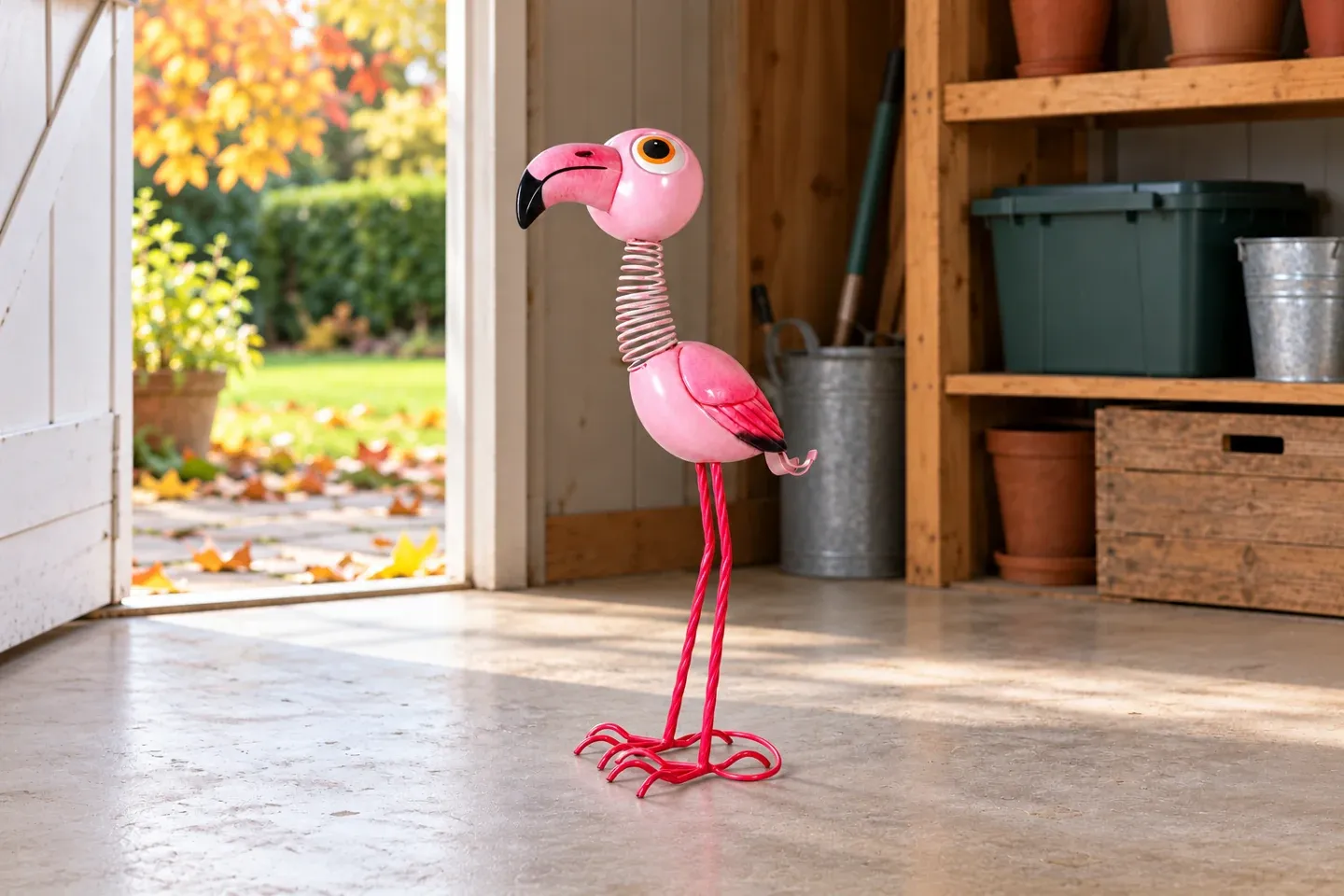
The Mloarts AF20 pink metal flamingo garden statue is described as a handmade iron flamingo with wind-driven movement. That feature makes movement clearance relevant; it does not establish a safe wind-speed rating. Do not invent one or assume that the ornament is intended for severe weather.
Keep moving parts away from plants, furniture and other decorations that could obstruct them. Follow the model's instructions rather than adding restraints or modifying the mechanism.
Clean according to the finish
Use the cleaning method specified for the product. Do not apply a generic rust remover, abrasive pad or protective coating without checking compatibility with the existing finish.
Before seasonal storage, follow the supplier's cleaning and drying guidance. Pack separate components so they do not rub against one another, retain the instructions and label removable fittings with the matching SKU.
If a repair is needed, ask which products and methods are approved. A repair suggestion for bare steel may not suit a painted decorative surface.
Make the seasonal decision product by product
Prepare a short record for each ornament: confirmed outdoor conditions, care instructions, current condition and whether sheltered storage is required. Shops can use the same information to answer questions consistently without making broad weatherproof claims.
This checklist is intended for gardens entering a cold or wet season. In another climate or hemisphere, use the local conditions rather than the calendar alone.
For Mloarts garden statues, request current care and placement guidance for the exact model. A seasonal display should be planned around the product's documented limits, with uncertain conditions clarified before the weather changes.