Oct 21, 2026How to art
Metal Figurines or Statement Sculptures: Finding Your Scale
Choose between metal figurines and statement sculptures. Compare footprint, visual weight, room placement, finishes, and clearance before buying.
Metal Figurines or Statement Sculptures: Finding Your Scale
A metal statue for home decor can be a small personal detail or the object that defines a room. The difference is not simply height. Footprint, silhouette, color, and surrounding space all determine how strongly a sculpture is perceived.
Before choosing between figurines and statement pieces, decide whether you want an accent to discover up close or a focal point visible from the doorway.
Decide What Role the Sculpture Will Play
A small figurine can sit among books or on a desk, where someone views it at close range. A statement sculpture usually needs a clearer setting so its full shape can be appreciated.
Intended role | Placement to explore | Main size check |
|---|---|---|
Personal desk accent | Clear corner of a desk | Working space and projecting details |
Shelf collectible | Suitable bookcase compartment | Height, depth, and visibility |
Console focal point | Uncluttered furniture surface | Full width, base, and surrounding space |
Floor-level feature | Appropriate clear floor area | Footprint, stability, and movement routes |
Wall focal point | Suitable wall position | Overall composition and mounting |
A tabletop figure does not become a tall metal floor sculpture simply because it is placed on the floor. Confirm the intended display method before buying.
Measure the Outline, Not Just the Body
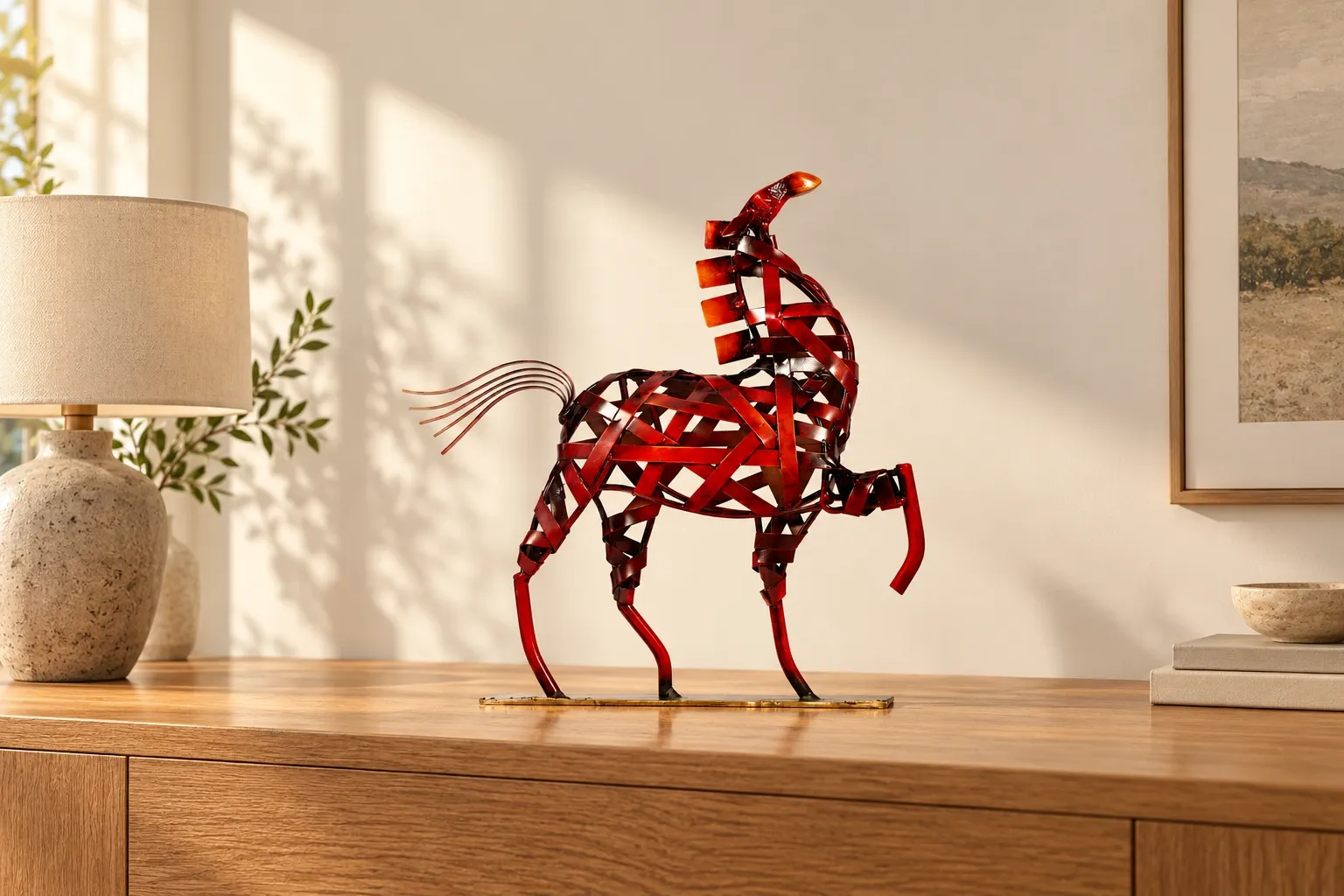
The horse sculpture pictured with this article has a raised head, lifted front leg, fine tail strands, and a long base. Each contributes to the space it needs.
Measure the complete width from the outermost tail detail to the furthest projecting part. Check total height, base depth, and weight separately.
Leave Room for the Silhouette
An expressive horse may need more clear space than a compact abstract form. If a lamp, plant, or picture overlaps its head and legs, the shape becomes harder to read.
Test the footprint using paper on the intended furniture. For a tall piece, use a temporary height marker and view it from the doorway. These tests assess appearance, not the furniture’s load capacity.
Understand Visual Weight
Openwork metal indoor statues reveal the wall behind them. This can make a broad sculpture feel lighter than a dense object of the same dimensions.
The horse’s interlaced strips and warm red finish give it both openness and strong color. A clear, pale backdrop would emphasize the structure; a patterned background could compete with it.
When comparing modern wood, stone, or metal decor figurines, consider texture as well as material. Wood grain, stone mass, and painted metal strips can produce different effects without any one material being universally better.
Choose Between Surface, Floor, and Wall Displays
A shelf collection and a large freestanding sculpture should be planned differently.
For floor standing metal sculptures, confirm the intended base, securing requirements, and suitability of the position. Keep clear of doors and normal movement routes. Do not raise a piece on an improvised stand unless that arrangement is appropriate.
For metal sculptures for the bedroom, check nighttime walking routes, furniture depth, and clearance around curtains. A slim silhouette can reduce visual bulk, but it does not eliminate physical projection.
Wall Art Is Another Kind of Statement
Gold metal wall art can create a focal point without using a tabletop. However, a broad wall composition may have more visual presence than a slim standing figure.
If comparing a statue with large gold metal wall decor or bronze leaves metal wall art, plan the complete display rather than comparing nominal heights.
Read Finish Descriptions Carefully
Gold-toned, bronze-toned, painted, and patinated describe different appearances or processes. They do not automatically establish that a piece is solid bronze, antique, or made with precious metal.
Check the actual base material and finish. If you like orange and brown metal wall art, for example, choose it for its palette without assuming age or a particular cultural origin.
Reflective finishes also change with light. Test how a metallic gold accent relates to nearby lamps, while darker metal may need a contrasting background to remain visible.
Check the Base and Contact Points
Before displaying a metal statue for home use, confirm:
- The base sits securely on the intended surface.
- The furniture is suitable for the object’s load.
- Projecting details cannot snag passing fabric.
- The underside will not damage the surface.
- The display leaves room for normal cleaning and use.
Follow supplier care guidance for cut edges, welded details, and painted finishes. Small handmade variations should not be used to dismiss loose parts or instability.
Choose Impact That Suits Your Space
Choose figurines when you want close-up interest and flexibility. Choose a statement sculpture when you can provide a clear setting, suitable support, and enough room for its outline.
For help comparing real dimensions, contact Mloarts about metal sculpture sizes and bases. Scale works best when the object feels deliberate rather than merely large.